
Every business space tells a story before a single word is spoken. For property managers and small business owners in the Greater Toronto Area, finding cost-effective commercial renovation solutions means more than just updating appearances. It is about transforming your building into a space that attracts tenants, keeps energy bills low, and meets new demands for sustainability. Discover how modern commercial renovation balances function, efficiency, and customer appeal to help your business thrive in a competitive market.
Table of Contents
- Defining Commercial Renovation In Business Settings
- Major Types Of Commercial Renovation Projects
- Step-By-Step Process For Renovating Commercial Spaces
- Legal, Permitting, And Accessibility Requirements
- Budgeting, Risks, And Mistakes To Avoid
Key Takeaways
| Point | Details |
|---|---|
| Strategic Renovation | Commercial renovation enhances function, aesthetics, and long-term value beyond mere cosmetic updates. |
| Sustainability Focus | Incorporating sustainable practices reduces waste and improves energy efficiency, appealing to tenants. |
| Regulatory Compliance | Ensuring adherence to legal and building codes avoids costly delays and liability issues throughout the renovation process. |
| Clear Planning | Defining project scope, goals, and clear communication minimizes scope creep and budget overruns, protecting your investment. |
Defining Commercial Renovation in Business Settings
Commercial renovation means more than just fresh paint and new fixtures. It’s a strategic process that transforms business spaces to improve function, aesthetics, and long-term value. Understanding what this means helps property managers and business owners make smarter decisions about their investments.
At its core, commercial renovation addresses three major areas:
- Structural and technical repairs that fix degradation and restore building integrity
- Energy performance upgrades that reduce utility costs and environmental impact
- Aesthetic improvements that enhance customer experience and brand perception
The scope has expanded significantly in recent years. Commercial renovation now incorporates sustainable reuse principles, including refurbishment, remanufacturing, and repurposing of existing building components. This circular economy approach reduces waste while maintaining quality.
In the Greater Toronto Area, this matters more than ever. Property managers face pressure to maximize space efficiency while controlling costs. A commercial renovation tackles both challenges simultaneously by modernizing tired spaces into competitive assets.
Here’s what separates effective renovation from simple cosmetic updates:
- Addresses underlying building systems, not just surface appearance
- Improves operational efficiency through better layouts and technology
- Increases property value and tenant appeal
- Reduces long-term maintenance costs through quality upgrades
- Supports sustainability goals, which tenants increasingly value
Effective commercial renovation balances immediate improvements with long-term operational value, transforming how your business space functions.
Your renovation should align with your business goals. Are you trying to attract premium tenants? Improve customer flow? Reduce energy bills? Each goal shapes different renovation priorities. A retail space needs customer-focused design; an office requires efficient layouts and modern amenities.
Many Toronto business owners underestimate the impact of a well-planned commercial renovation. When executed properly, it extends building lifespan, reduces operational headaches, and creates spaces that actually work for modern business needs.
Pro tip: Start by defining your renovation goals and measuring current performance—whether that’s foot traffic, tenant retention, or energy costs—so you can actually track the improvement your renovation delivers.
Major Types of Commercial Renovation Projects
Commercial renovation projects vary widely depending on the building type and business needs. Understanding the main categories helps you plan effectively and budget appropriately for your space.
Different commercial buildings require different renovation approaches. Standard commercial building types include offices, warehouses, retail stores, schools, hospitals, and hotels. Each demands unique solutions based on how the space functions.
Here are the primary renovation project types you’ll encounter:
- Structural retrofitting addresses aging infrastructure and building systems
- Energy efficiency upgrades reduce utility costs and environmental impact
- System modernization replaces outdated HVAC, plumbing, and electrical systems
- Compliance renovations update spaces to meet current building codes and regulations
- Aesthetic and layout improvements enhance customer experience and operational flow
Energy efficiency projects deserve special attention. Many Toronto property managers prioritize these because they deliver immediate cost savings. Installing LED lighting, upgrading insulation, and replacing old HVAC systems significantly reduce monthly utility bills while improving tenant comfort.
Deep energy retrofitting involves comprehensive upgrades that often include renewable energy systems installation. This approach targets older buildings, which account for much of the commercial real estate in the Greater Toronto Area.

Retail renovations focus heavily on customer experience and flow. Updated storefronts, improved lighting, and modern fixtures attract foot traffic and encourage spending. Office renovations emphasize productivity through better layouts, collaboration spaces, and technology integration.
Warehouse and industrial spaces require different priorities altogether. These projects typically focus on safety upgrades, ventilation improvements, and operational efficiency rather than customer-facing aesthetics.
The most effective renovation matches your building type and business goals, not what worked for someone else’s space.
Compliance renovations address safety codes, accessibility standards, and fire regulations. These aren’t optional—they’re legal requirements. Older commercial buildings often need substantial updates to meet current standards.
System modernization goes beyond cosmetic updates. Aging HVAC systems fail at inconvenient times and waste energy. Modern replacements improve air quality, reduce maintenance headaches, and lower operating costs over time.
Most commercial renovations combine multiple project types. You might upgrade systems while improving aesthetics and addressing code compliance simultaneously. This integrated approach maximizes your investment’s impact.
Here is a quick comparison of renovation approaches for different business types:
| Business Type | Top Renovation Priority | Key Benefit | Unique Challenge |
|---|---|---|---|
| Office | Layout and technology | Higher productivity | Integrating modern amenities |
| Retail | Customer experience | Increased sales | Constantly changing trends |
| Warehouse | Safety and efficiency | Fewer accidents | Upgrading ventilation systems |
| Hospitality | Guest amenities | Improved reviews | Minimizing downtime during upgrades |
| Medical | Compliance upgrades | Lower liability | Meeting strict codes |
Pro tip: Identify which project types directly affect your bottom line first—whether that’s energy costs, tenant retention, or customer experience—and prioritize those renovations to demonstrate clear ROI quickly.
Step-By-Step Process for Renovating Commercial Spaces
A successful commercial renovation follows a structured path from initial planning through project completion. This process protects your investment, manages costs, and keeps timelines realistic.
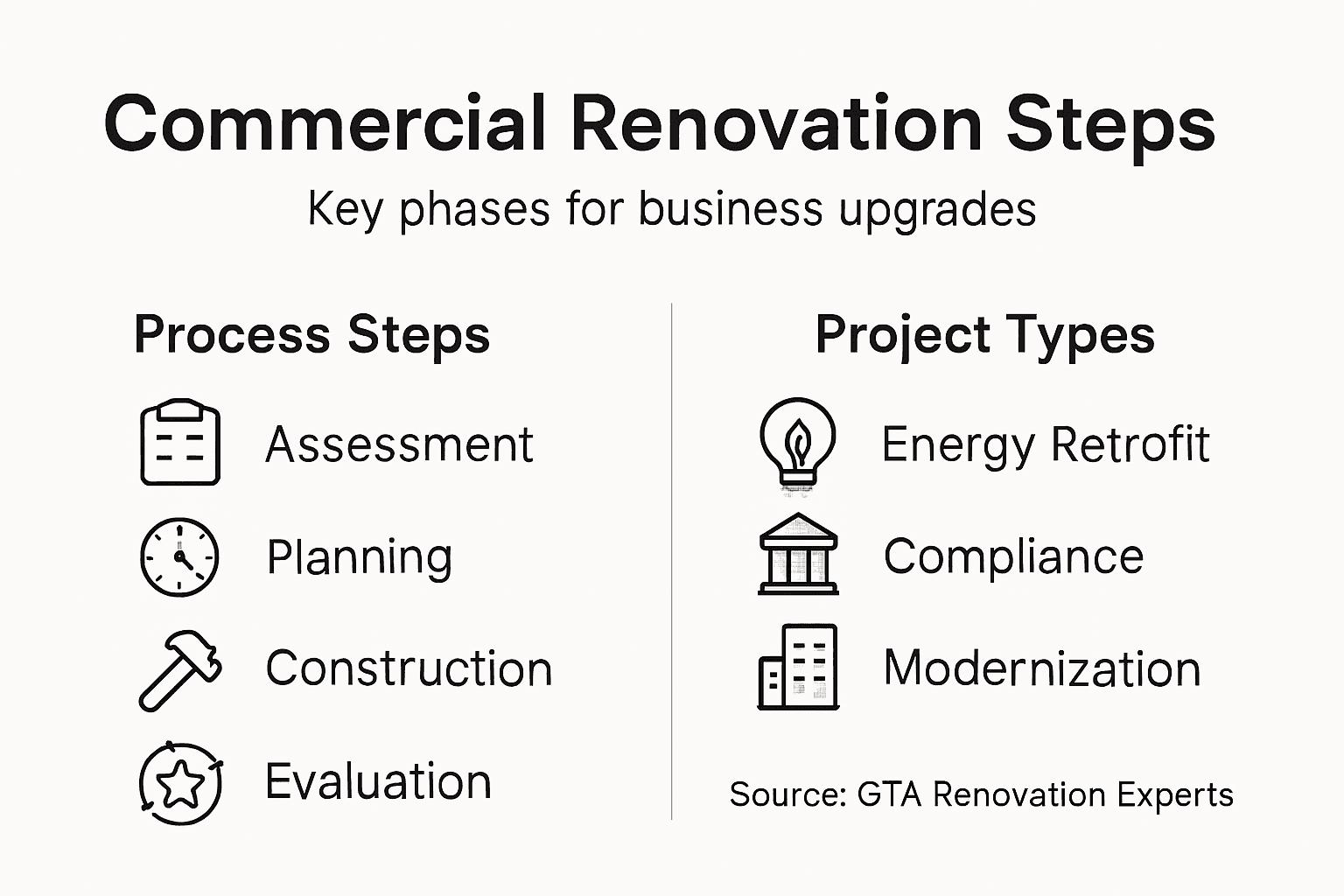
The renovation journey involves multiple distinct phases. Skip steps or rush through planning, and you’ll face expensive delays, code violations, or scope creep that drains your budget. Following a proven process prevents these common pitfalls.
Here’s how the process flows:
- Define your project scope and goals – Clarify what needs fixing, what’s optional, and what success looks like for your business
- Conduct professional assessment – Have specialists evaluate structural conditions, systems, and regulatory compliance requirements
- Develop detailed designs and budgets – Work with architects and contractors to create realistic timelines and cost estimates
- Secure permits and approvals – Obtain necessary regulatory clearances before construction begins
- Manage construction – Oversee quality, timeline adherence, and communication throughout the project
- Complete inspections and final sign-off – Verify work meets standards and building codes
- Evaluate results and document lessons – Track performance improvements and capture what worked well
Integrated project delivery ensures consistent communication between all stakeholders throughout renovation. This approach reduces conflicts, catches problems early, and keeps projects on budget.
The planning phase is critical. Many Toronto property managers underestimate how much time proper planning saves during construction. Defining scope prevents contractors from making assumptions that lead to change orders and delays.
Assessment isn’t just about what you can see. Professional inspectors identify hidden issues with electrical systems, structural integrity, and environmental compliance that affect your budget significantly.
Securing regulatory approvals and managing stakeholder communication prevents costly rework and legal complications. Different building types require different permits, and timelines vary considerably.
Construction management keeps your project moving forward. Regular site inspections, weekly meetings, and documented decisions prevent misunderstandings between contractors, designers, and building owners.
A structured process transforms renovation from overwhelming chaos into manageable phases with clear objectives and measurable progress.
Post-construction evaluation matters more than most business owners realize. Document energy savings, track tenant satisfaction, measure customer traffic increases. These metrics justify your renovation investment and inform future decisions.
Monitoring performance during the first few months reveals unexpected issues requiring minor adjustments before they become major problems. This adaptive management approach protects your investment long-term.
Pro tip: Assign one person as the project owner responsible for decisions, timeline tracking, and stakeholder communication throughout all seven phases—this prevents confusion and keeps the renovation moving forward smoothly.
Legal, Permitting, and Accessibility Requirements
Ignoring legal and permitting requirements can halt your renovation mid-project and create expensive liability issues. These aren’t administrative hassles—they’re mandatory protections for your business and occupants.
Every commercial renovation requires permits from your local municipality. Toronto’s building department reviews plans to ensure structural safety, fire protection, electrical safety, and plumbing compliance. Skipping permits results in stop-work orders, fines, and problems selling or refinancing your property.
Here’s what you need to handle:
- Building permits for any structural changes, system upgrades, or significant renovations
- Electrical permits for new wiring, panels, or power distribution changes
- Plumbing permits for water line, drain, or fixture modifications
- Fire safety approvals for egress routes, sprinkler systems, and occupancy changes
- HVAC permits for new heating, cooling, or ventilation system installation
Accessibility compliance is a legal requirement, not optional. Alterations to commercial buildings must meet accessibility standards under the Americans with Disabilities Act. This applies to entrances, bathrooms, workspaces, and emergency exits.
When you renovate more than 25 percent of a building’s surface area, new construction accessibility standards typically apply to the entire altered area. Partial renovations require compliance with current codes, even if the original building doesn’t meet current standards.
Accessibility requirements include wheelchair ramps, accessible parking, door widths, sink heights, and clear floor spaces. These aren’t one-size-fits-all—each building type has specific requirements. A retail space has different needs than an office or warehouse.
Local building codes often exceed federal standards. Greater Toronto Area municipalities may require additional fire safety measures, energy efficiency standards, or environmental compliance beyond ADA requirements. Your contractor and designer must understand these local variations.
Compliance with local codes and sustainability requirements prevents delays and ensures your renovation meets all legal obligations. Planning for these requirements during the design phase costs far less than making changes during construction.
Failing accessibility compliance creates legal liability. If someone is injured or denied access because your renovation didn’t meet standards, lawsuits and fines follow. Insurance won’t cover violations of known legal requirements.
Legal compliance isn’t a cost to minimize—it’s an investment in protecting your property, your business, and the people who use your space.
Permitting timelines vary significantly. Simple renovations might take 2-3 weeks; complex projects can require 8-12 weeks for municipal review. Budget this time into your project schedule.
Working with experienced contractors and designers who understand Toronto’s specific codes prevents costly compliance problems. They know which permits you’ll actually need and how to design renovations that pass inspection.
Pro tip: Contact your local building department before finalizing renovation designs and get written confirmation of all required permits and accessibility standards—this prevents expensive redesigns after construction starts.
Budgeting, Risks, and Mistakes to Avoid
Commercial renovations often exceed budgets and timelines. Understanding common pitfalls helps you plan realistically and protect your investment from costly surprises.
Most renovation budgets fail for the same reasons. Inadequate planning, scope creep, and hidden site conditions drain money faster than projected. Add poor communication between stakeholders, and projects become financial disasters.
Here are the primary budget killers:
- Scope creep when “while we’re at it” additions expand the project beyond original plans
- Unforeseen site conditions like hidden structural damage, asbestos, or outdated systems discovered mid-project
- Underestimating regulatory impacts including permit delays, code compliance costs, and inspector requirements
- Inadequate contingency reserves when budgets don’t account for realistic risks
- Poor stakeholder communication causing misunderstandings and costly rework
Thorough cost estimation and contingency planning prevent budget overruns. Build a 15-25 percent contingency reserve into your budget for commercial projects. This isn’t wasted money—it’s protection against reality.
Fire safety is a frequently overlooked cost. Many business owners skip fire protection upgrades thinking they’ll get away with it. Neglecting fire protection during renovations jeopardizes building occupants and creates regulatory penalties costing thousands more than proper planning would have.
Scope creep destroys project budgets. Someone suggests upgrading plumbing while walls are open. Then electrical systems need modernizing. Before you know it, the $50,000 renovation becomes $85,000. Define scope clearly and refuse changes without formal approval and budget adjustment.
Hidden site conditions reveal themselves mid-project. Structural damage, outdated wiring, or contaminated soil require emergency decisions. Professional pre-renovation assessments identify these issues before construction begins, preventing shock discoveries.
Risk management requires proactive planning. Identify potential problems early, assign responsibility, and establish response protocols. Regular site inspections and communication between contractors and managers catch problems before they become expensive crises.
A well-padded contingency budget isn’t pessimism—it’s smart business planning that protects your financial position when unexpected issues emerge.
Underestimating regulatory timelines and costs is common. Permits take longer than expected. Inspectors require modifications. Code compliance adds expenses. Budget for these delays and costs explicitly.
Poor communication between property managers, contractors, designers, and municipal officials creates expensive rework. Establish clear communication protocols, schedule regular meetings, and document all decisions in writing.
Failing to plan for fire safety, accessibility, or code compliance creates costly rework and potential liability. These must be budgeted and planned from day one, not afterthoughts.
Below is a summary of common budgeting mistakes and their prevention strategies:
| Pitfall | Why It Happens | Prevention Strategy |
|---|---|---|
| Scope creep | Unplanned change requests | Formal approval process |
| Hidden conditions | Missed issues pre-construction | In-depth site assessments |
| Underestimating permits | Overlooking regulatory steps | Early code and permit review |
| Inadequate contingency | Insufficient risk planning | 15-25% reserve in budget |
| Poor communication | Disconnected stakeholders | Regular project meetings |
Pro tip: Create a detailed risk register documenting potential problems, likelihood, financial impact, and who’s responsible for addressing each risk—review it monthly with your contractor to catch emerging issues before they derail the budget.
Elevate Your Business Space with Expert Commercial Renovation Services
Transforming your commercial property goes beyond simple updates. Whether your goal is to enhance operational efficiency, improve energy performance, or ensure compliance with legal standards and accessibility requirements, careful planning and skilled execution are essential. Common challenges such as scope creep, hidden site conditions, and regulatory hurdles can derail your project if not managed properly. At Reformity Inc., we understand these pain points and deliver tailored renovation solutions that balance immediate improvements with long-term value.
Take advantage of comprehensive commercial renovation expertise from a trusted Greater Toronto Area contractor. From structural retrofitting to system modernization and aesthetic upgrades, Reformity Inc. handles all phases of your project with attention to detail and quality craftsmanship. Act now to protect your investment by partnering with professionals who prioritize clear communication, timely delivery, and budget control. Visit Reformity Inc. to explore how our services transform business spaces. Ready to start your renovation journey? Contact us today to schedule a consultation and see your commercial property reach its full potential.
Discover more renovation insights at Commercial Renovation Solutions and see our portfolio of successful projects on Reformity Inc…
Frequently Asked Questions
What are the key components of a successful commercial renovation?
Successful commercial renovations focus on structural repairs, energy efficiency upgrades, and aesthetic improvements. These components work together to enhance functionality, reduce costs, and elevate customer experience.
How can commercial renovations improve energy efficiency in a business?
Energy efficiency can be improved through upgrades like installing LED lighting, enhancing insulation, and modernizing HVAC systems. These changes can lead to significant reductions in utility costs and environmental impact.
What is the typical process for planning a commercial renovation?
The planning process includes defining project scope and goals, conducting assessments, developing designs and budgets, securing permits, managing construction, and evaluating results post-renovation to ensure that objectives are met and lessons are documented.
What legal and permitting requirements should be considered during a commercial renovation?
All commercial renovations require building, electrical, plumbing, fire safety permits, and compliance with accessibility standards. It’s crucial to understand and secure these permits before commencing any construction to avoid costly delays and legal issues.