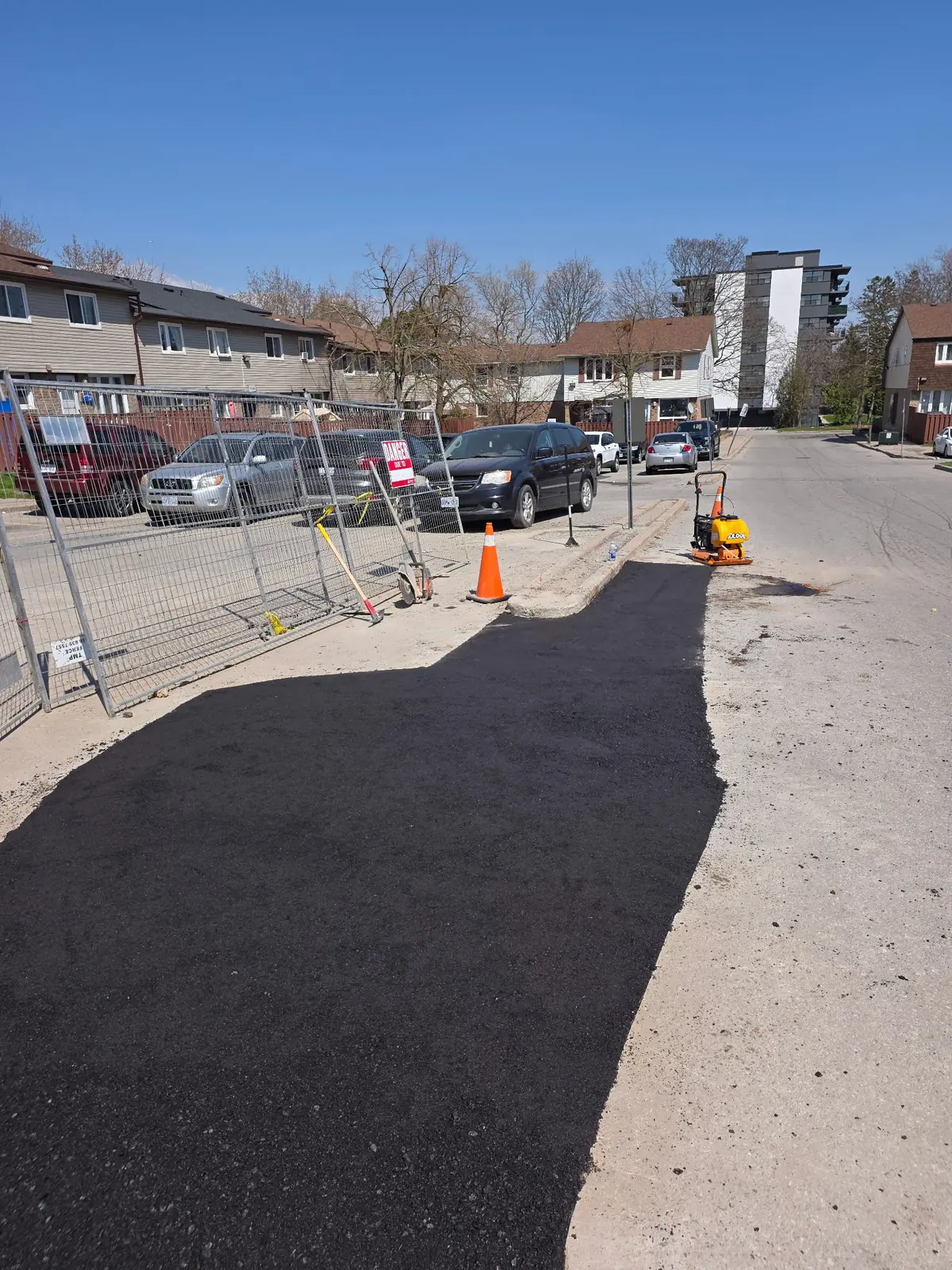
Asphalt remains one of the most common driveway surfaces in the GTA, largely because it installs faster and costs less upfront than interlocking or concrete. But it also behaves differently through our freeze-thaw winters, and homeowners often aren't sure when a driveway needs a simple seal, a patch, or a full tear-out. This guide covers realistic 2026 pricing, what a proper installation involves, and how to read the warning signs before a small crack becomes a structural problem.
Why Asphalt Still Makes Sense for GTA Driveways
Asphalt is flexible by nature, which is actually an advantage in a climate that freezes and thaws repeatedly from November through April. Interlocking pavers and concrete slabs can heave or crack when the ground beneath them moves; asphalt tends to flex slightly instead. That said, flexibility only helps if the base preparation underneath is done correctly — most asphalt driveway failures in this region trace back to inadequate excavation depth, poor compaction, or missing granular base, not the asphalt mix itself.
If you're weighing asphalt against other surfaces for a new driveway, it's worth reading our comparison of interlocking vs. concrete driveways — asphalt sits below both in upfront cost but requires more frequent maintenance to hit a comparable lifespan.
What Proper Installation Involves
A correctly built residential asphalt driveway in the GTA typically includes:
- Excavation to 200–300 mm (8–12 inches) depending on soil conditions
- A compacted granular base (Granular A over Granular B is standard)
- Grading the base to shed water away from the garage and foundation
- Asphalt laid in one or two lifts (base lift plus a finish/top lift for driveways expecting heavier loads)
- Proper edge support so the perimeter doesn't crumble under wheel weight
- A minimum 2% slope to prevent ponding
Skipping the granular base or laying asphalt directly over existing cracked pavement (a cheap "overlay" some contractors push) almost always leads to premature failure within 2–3 winters. If your existing driveway already has drainage problems pooling near the garage or house, it's worth addressing grading first — our post on backyard grading and drainage covers how surface water movement affects everything nearby, including driveway edges.
2026 Cost Estimates
Prices vary by driveway size, base condition, and whether old asphalt or concrete needs to be removed first. These are general 2026 estimates for the GTA; always get a written quote based on a site visit.
| Driveway Size | New Install (incl. base) | Removal + Replace (existing driveway) | Seal Coating Only |
|---|---|---|---|
| Single-car (approx. 300–400 sq ft) | $3,800 – $6,200 | $4,800 – $7,500 | $250 – $450 |
| Double-car (approx. 600–800 sq ft) | $6,500 – $10,500 | $8,000 – $13,000 | $450 – $700 |
| Large/extended (900+ sq ft) | $10,000 – $16,000+ | $12,000 – $18,000+ | $700 – $1,100 |
Factors that push costs to the higher end include steep grades, poor soil requiring extra excavation, tight access for equipment, and adding a decorative border in interlocking or concrete along the edges — a popular hybrid look in newer GTA subdivisions.
Maintenance Schedule: Sealing, Patching, and When to Stop Delaying Repairs
Asphalt is a maintenance-dependent surface. Left alone, sun exposure and freeze-thaw cycling will oxidize and crack it faster than most homeowners expect.
Sealing: Most GTA driveways benefit from sealcoating every 2–3 years, ideally applied in warm, dry weather (late spring through early fall). A brand-new driveway should typically cure for 6–12 months before its first seal coat.
Crack sealing: Hairline cracks under about 6 mm should be filled as soon as they appear — this is inexpensive and prevents water from getting under the surface and expanding the crack during winter freezing.
Patching vs. replacement: As a rough rule:
- Isolated cracking and minor surface wear on a driveway under 10 years old → seal and crack-fill
- Alligator cracking (a web pattern) over more than 25–30% of the surface → patch sections or consider a mill-and-overlay
- Widespread heaving, potholes reaching the base layer, or a driveway over 15–20 years old with repeated patch failures → full removal and replacement
Signs Your Asphalt Driveway Needs Attention Now
- Standing water that doesn't drain within a few hours after rain
- Cracks wide enough to fit a finger, especially running toward the garage
- Crumbling or "raveling" edges where the asphalt meets grass or gardens
- Potholes that return after DIY cold-patch repairs
- Noticeable dips or soft spots when driving over the same section repeatedly
- Sun-bleached, grey, dry-looking surface (a sign the protective binder has oxidized out)
Permits and Municipal Notes
Most residential driveway resurfacing or replacement within an existing footprint does not require a building permit in Brampton, Mississauga, or Toronto, since it's considered surface work rather than structural. However, if you're widening a driveway, adding a new curb cut, or changing where it meets the municipal road allowance, you'll likely need approval from the local municipality's transportation or right-of-way department — rules and application processes differ by city. Toronto in particular regulates driveway widening tied to front-yard parking bylaws. Always confirm current requirements with your specific municipality before work begins, since setback and maximum width rules do change.
Choosing a Contractor
Because so much of asphalt's lifespan depends on unseen base work, ask contractors specifically about their excavation depth, base material, and compaction method — not just the finished look. A written quote should specify base depth, asphalt thickness (top lift, in particular), and drainage slope, not just a lump-sum price.
If you're planning a full exterior refresh rather than just the driveway, it's worth coordinating asphalt work with other projects — timing driveway replacement alongside fencing or landscaping work can reduce disruption and sometimes save on mobilization costs.
Frequently Overlooked Details
Homeowners often forget to plan for the driveway apron — the section connecting the private driveway to the municipal road. This section sees the most stress from vehicle turning and is often municipally regulated in terms of material and slope. Confirm with your contractor whether the apron is included in your quote or billed separately, since some municipalities have specific requirements for this transition zone.
Get a written quote that breaks down base preparation, drainage, and asphalt thickness by contacting our team for a free site assessment.
Related Services