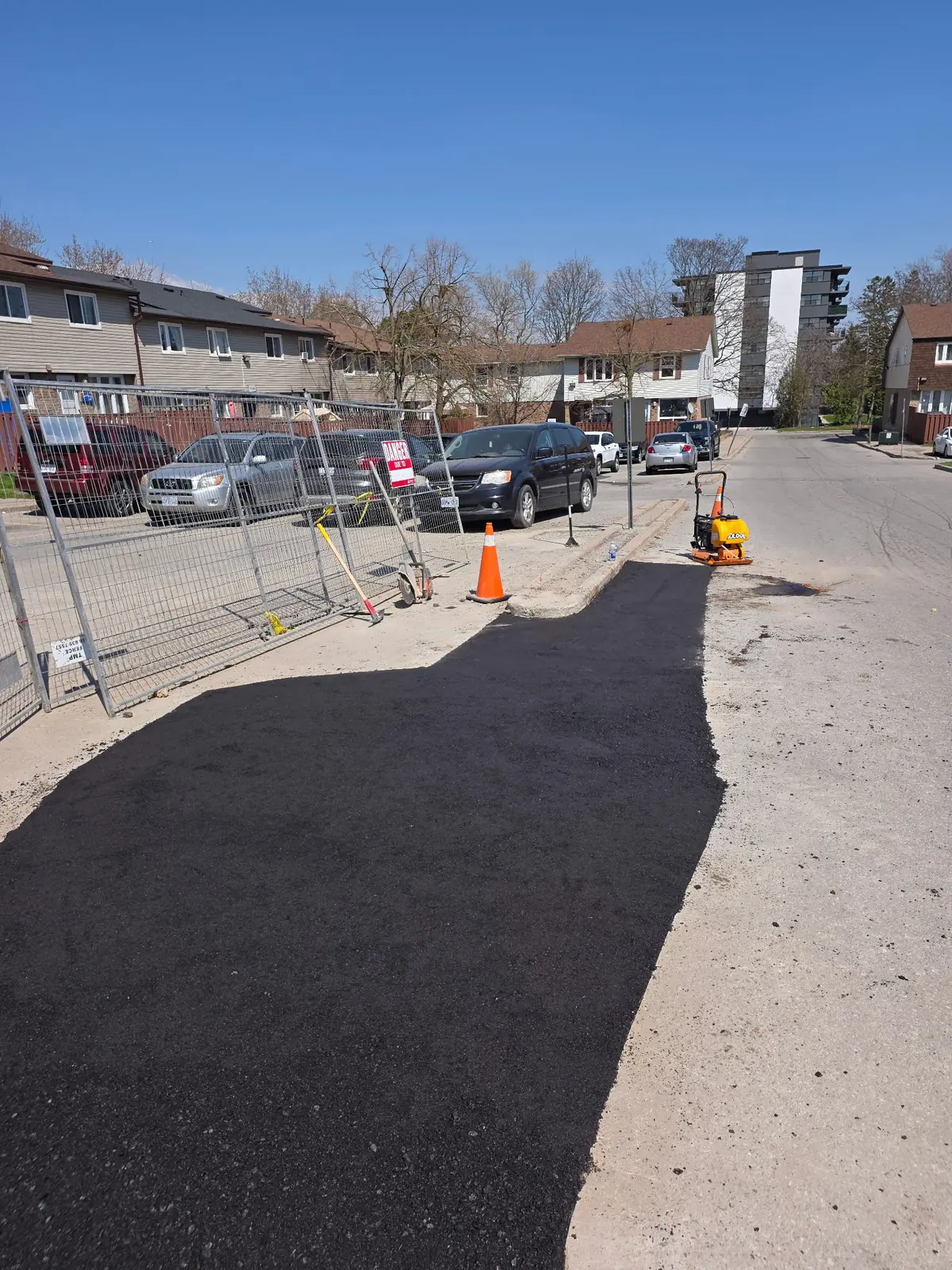
Asphalt Lifecycle: When to Sealcoat, Repair, or Repave Your Commercial Parking Lot
A commercial parking lot is one of the few capital assets on your property that degrades a little every single day — and the cost of ignoring it compounds. Catch the lot at the right point in its lifecycle and a few thousand dollars of maintenance buys you another decade. Miss that window and you're looking at full-depth reconstruction at five to ten times the price.
The hard part for most property managers and facility managers in the GTA isn't deciding to spend money. It's knowing which intervention the lot actually needs right now. Sealcoating a lot that needs structural repair is throwing money at a cosmetic problem. Repaving a lot that just needs crack-fill and a seal is burning capital you didn't have to.
Here's how to read where your asphalt is in its life, and what the right move is at each stage.
The four stages of asphalt life in Ontario
Asphalt in the GTA ages faster than the manufacturer's lab numbers suggest, and the reason is our climate. Freeze-thaw cycling — water seeps into the surface, freezes overnight, expands, thaws, and repeats 50 to 70 times a winter — is the single biggest driver of pavement failure here. Add road salt, UV oxidation in summer, and heavy delivery and garbage-truck loads, and a lot ages in distinct phases.
| Stage | Age (typical) | What you see | Right intervention |
|---|---|---|---|
| New / oxidizing | 0–3 years | Rich black fading to grey, no cracks | First sealcoat at year 1–2 |
| Mature | 3–8 years | Surface greying, hairline & minor cracks | Crack-fill + sealcoat on a cycle |
| Distressed | 8–15 years | Alligator cracking, potholes, edge ravel | Targeted repair (patch / mill & overlay) |
| End of life | 15–25+ years | Widespread base failure, ponding, depressions | Full or partial repave |
These ranges are typical, not guarantees. A lot built on a thin or poorly compacted granular base can hit "distressed" by year five. A properly engineered lot that gets maintained on schedule can push past 25 years before reconstruction.
When to sealcoat
Sealcoating is a thin protective coat — usually an asphalt emulsion or refined-tar-based product — applied over structurally sound pavement. It does not add strength. What it does is replace the surface binder that UV and oxidation strip away, block water and salt from penetrating, and restore the black finish that makes a property look maintained.
Sealcoat when:
- The pavement is structurally sound — no widespread cracking, no soft spots, no ponding.
- The surface has greyed but the asphalt below is still tight and dense.
- You're on a maintenance cycle and it's been roughly three to five years since the last coat.
In the GTA, the realistic resealing interval is every three to five years, not the two-year cycle some warmer climates use. Resealing too often wastes budget; the coating simply hasn't worn off yet. Timing matters too — sealcoat needs surface temperatures consistently above roughly 10°C to cure, so the practical window here runs from late May through early October. Booking in spring beats the September rush.
What sealcoating won't do: fix cracks (those get routed and filled first), repair potholes, or rescue a failing base. If a contractor proposes sealcoat over a lot with alligator cracking, that's a coat of paint over a structural problem — and it'll bleed through within a season.
When to repair
Repair is the middle game, and it's where smart asset management saves the most money. The goal is to address localized failures before they spread into the base course, where repairs get exponentially more expensive.
Common repair interventions, lightest to heaviest:
- Crack sealing — routing out cracks wider than about 6 mm and filling with hot rubberized sealant. This is the highest-ROI maintenance you can do. Every sealed crack is water that doesn't reach the base.
- Pothole patching — saw-cut, square-edged, full-depth patches. Throw-and-go cold patch is a temporary stopgap, not a repair; insist on proper hot-mix patching for anything permanent.
- Mill and overlay — grinding off the top 50 mm or so of asphalt and laying fresh surface course. This restores the driving surface and appearance when the base is still good but the surface is spent. It's the workhorse of commercial asphalt and far cheaper than reconstruction.
- Partial-depth reconstruction — removing and rebuilding isolated areas where the base has failed (often near loading docks, dumpster pads, and drive aisles that take truck weight).
The key diagnostic question is: is the failure surface-only, or has it reached the base? Alligator (interconnected) cracking is the tell. Isolated linear cracks are a surface and maintenance issue. Alligator patterns mean the base is moving — that area needs full-depth repair, not an overlay. A proper assessment from a qualified commercial paving team includes core sampling or at least probing soft areas, not just a walk-around.
When to repave
Repaving — full-depth removal and reconstruction — is the capital event you plan for, not the emergency you react to. You're at this stage when:
- More than roughly 30–40% of the surface shows base-level distress (alligator cracking, depressions, ponding).
- Patching has become a recurring line item and you're chasing the same failures every year.
- Drainage has failed — water ponds after every rain, which accelerates everything else.
- The lot has hit 20-plus years and is past meaningful maintenance return.
Full reconstruction means excavating to the subgrade, re-establishing a properly compacted granular base, and laying new binder and surface courses. It's disruptive and it's the biggest number on the page — but a correctly rebuilt lot resets the entire lifecycle clock.
Two GTA-specific notes worth budgeting for:
- Accessibility compliance. Any reconstruction or significant alteration is the moment to bring parking into line with the Accessibility for Ontarians with Disabilities Act (AODA) and the Ontario Building Code — accessible space counts, dimensions, and signage. Retrofitting later costs more.
- Stormwater and grading. Many municipalities scrutinize drainage on commercial site alterations. Rebuilding is your chance to fix grading and ponding properly rather than paving over a drainage problem.
Building a lifecycle plan instead of reacting
The properties that spend the least over 25 years are the ones treating asphalt as a managed asset, not a fire to put out. A simple, defensible plan looks like this:
- Document the baseline. Get a condition assessment with photos and a distress map.
- Seal on cycle. Crack-fill annually; reseal every three to five years.
- Patch early. Address potholes and base failures in the season they appear.
- Forecast the capital event. Know roughly which year reconstruction lands so it hits a budget cycle, not a surprise.
- Reassess yearly. A 20-minute spring walk-through with your contractor keeps the plan honest.
This same discipline applies whether you're managing a retail plaza, an office campus, or a logistics yard — though heavy-duty industrial surfaces carry their own load and base specs. You can see how we approach the full scope across our commercial services.
The bottom line
Sealcoat protects a sound lot. Repair extends a tiring one. Repave resets a failed one. The expensive mistake is doing the wrong one — and the most expensive of all is doing nothing while water and freeze-thaw quietly destroy the base you can't see.
If you're not sure which stage your lot is actually in, that's exactly the question a proper on-site assessment answers. Contact our commercial team to schedule a walk-through — we'll map the distress, tell you straight which intervention the lot needs this year, and give you a multi-year plan with the capital event flagged before it becomes a surprise.
Related Services