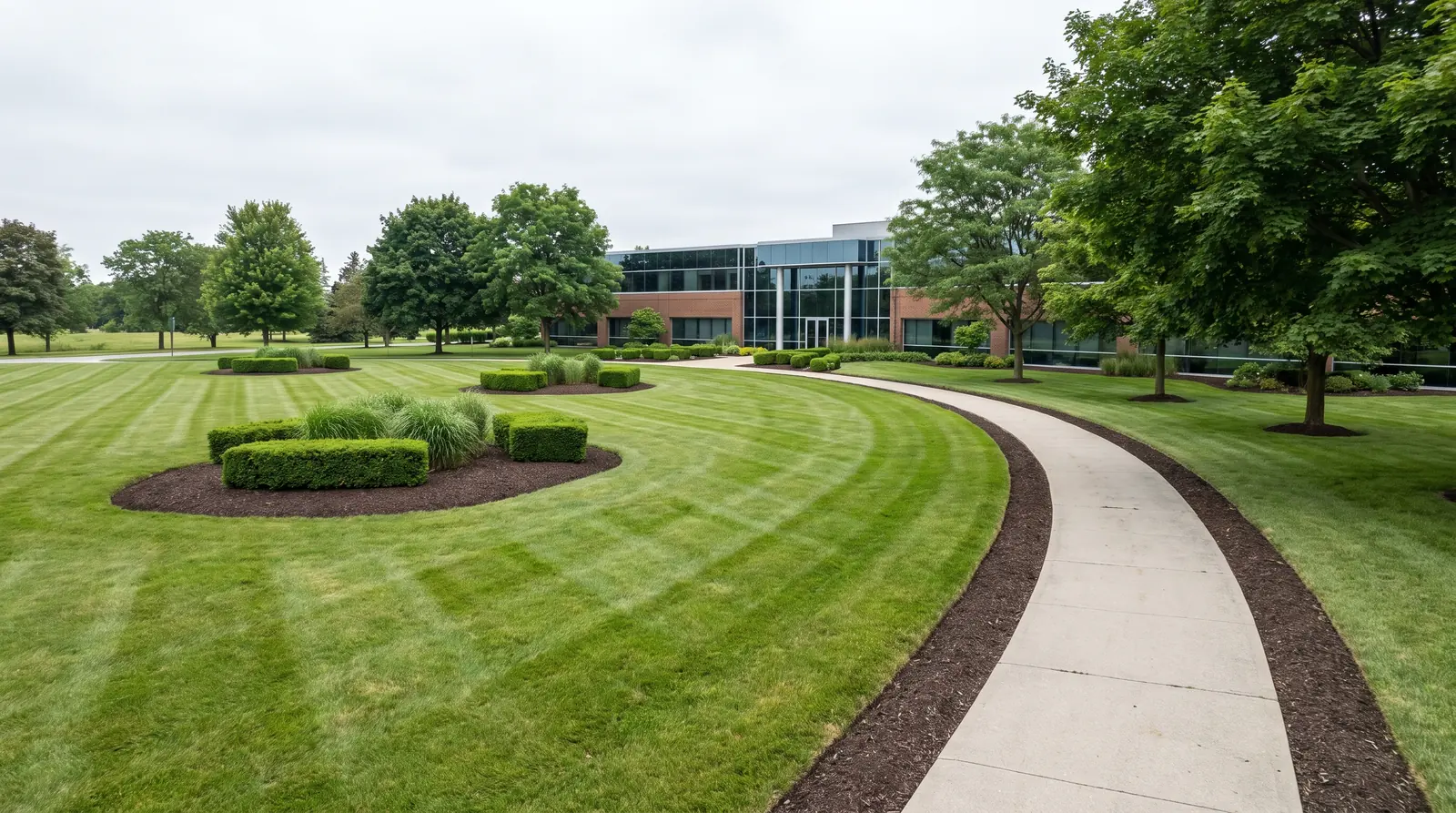
Curb Appeal & Tenant Retention: How Exterior Maintenance Protects Property Value
Ask most commercial owners where their building's value lives and they'll point inside — the rent roll, the lease terms, the cap rate. But the first thing a prospective tenant, a lender's appraiser, or an acquisition team sees is the exterior. In the GTA's competitive commercial and multi-residential market, the parking lot, the entrance, and the landscaping do more to set the tone than any brochure. Deferred exterior maintenance reads as deferred everything — and it quietly compounds into vacancy, lower renewals, and a softer valuation.
This is a look at how exterior condition connects to tenant retention and asset value, written for owners, developers, property managers, and facility managers operating across Brampton, Mississauga, Vaughan, Toronto, and the surrounding region.
Why the exterior drives leasing decisions
A tenant tour starts in the parking lot. By the time anyone reaches the suite, they've already formed an opinion based on pavement condition, signage, snow-clearing history, and how the grounds are kept. For office and retail tenants whose own customers see the property, curb appeal is part of their brand, not just yours.
The connection works in three directions:
- Attraction. Clean, well-lit, well-graded sites lease faster and command stronger asking rates.
- Retention. Tenants renew when a building feels cared for. A pothole-filled lot or a flooding entrance becomes a recurring complaint and a reason to shop competitors at renewal.
- Valuation. Appraisers and buyers price in visible deferred maintenance. A failing asphalt lot or settling walkways shows up as a capital reserve line on every offer.
The exterior elements that matter most
Not all curb appeal is equal. Some elements are cosmetic; others are structural and tied to liability. Here's how the major exterior systems compare in their impact on leasing, retention, and risk.
| Exterior element | Tenant-facing impact | Liability / value risk if neglected | Typical GTA refresh cadence |
|---|---|---|---|
| Parking lot & drive aisles | Very high (first impression, daily use) | Trip hazards, ponding, base failure | Seal every 2–4 yrs; resurface 12–18 yrs |
| Entrances & walkways | Very high (every visitor) | Slip-and-fall claims, accessibility | Inspect annually; re-level as needed |
| Landscaping & grounds | High (brand perception) | Overgrowth, drainage onto pavement | Seasonal, ongoing |
| Concrete curbs & catch basins | Medium (visible, drainage) | Water pooling, freeze-thaw spalling | Inspect annually |
| Site lighting | High (safety perception) | Security incidents, after-dark vacancy | Audit annually |
| Signage & wayfinding | Medium | Confusion, dated impression | As needed |
The pattern is clear: the surfaces people walk and drive on carry both the strongest first impression and the highest liability exposure. That's why pavement and walkways deserve the largest share of an exterior reserve.
The GTA factor: freeze-thaw is the real enemy
Every exterior maintenance plan in this region has to be built around the freeze-thaw cycle. Southern Ontario can swing across the freezing point dozens of times each winter. Water seeps into cracks during a thaw, freezes overnight, expands, and pries the crack wider. Repeat that for a season and a hairline crack becomes a pothole.
A few region-specific realities:
- Asphalt fails from the edges and cracks in. Sealing and crack-filling on a schedule is far cheaper than letting water reach the granular base. Once the base is compromised, you're into full-depth repair. See our parking lot & asphalt services for how staged maintenance extends pavement life.
- De-icing salt accelerates concrete spalling. Curbs, walkways, and stair landings take the worst of it. Penetrating sealers and good drainage slow the damage.
- Drainage is everything. Most premature pavement and concrete failure we're called to repair traces back to water that had nowhere to go. Catch basins, proper grading, and clear swales protect every other surface on the site.
- Snow operations leave marks. Plow routes, salt staging, and pile placement all affect spring condition. A site planned around winter operations recovers faster and looks better in April.
What deferred maintenance actually costs
The expensive part of deferred maintenance is rarely the eventual repair — it's the years of compounding before the repair. A lot that could have been sealed and crack-filled on a modest annual budget instead reaches base failure and needs full-depth reconstruction at many multiples of that cost.
The hidden costs stack up alongside the obvious one:
- Slower leasing. A tired exterior lengthens vacancy. Every extra month of vacancy is lost NOI that no repair invoice captures.
- Weaker renewals. Tenants use visible neglect as leverage at renewal — or as a reason to leave.
- Liability exposure. Trip-and-fall and slip claims on poorly maintained lots and walkways are among the most common premises-liability incidents, and Ontario's Occupiers' Liability Act puts the duty of reasonable care squarely on the property's occupier.
- Valuation drag. Buyers underwrite visible deferred work as an immediate capital cost and often pad it for risk.
The reverse is also true: a documented, proactive maintenance program is an asset at sale. It signals a well-run building and removes a negotiating lever from the buyer.
Building a proactive exterior plan
The goal is to move from reactive (fix it when it fails) to planned (extend life on a schedule). For most GTA commercial and multi-residential sites, that looks like a tiered program.
Annual baseline
- Spring walk-through after the thaw to catch winter damage early
- Crack-filling and pothole patching before water gets into the base
- Catch-basin and drainage inspection
- Lighting and signage audit
- Landscape cleanup and grading checks where soil meets pavement
Multi-year capital cadence
- Sealcoating asphalt on a two-to-four-year cycle
- Concrete curb and walkway repair as freeze-thaw damage appears
- Line-painting and accessibility compliance refresh
- Planned resurfacing or reconstruction once the base reaches end of life
Bundling these into a single coordinated scope — rather than chasing individual trades reactively — usually means better pricing, less site disruption for tenants, and one accountable point of contact. Our commercial services are structured to be sequenced this way, so pavement, concrete, and grounds work are planned together instead of colliding.
Tying it back to retention
Tenant retention is mostly about whether people feel the building is being looked after. The exterior is the most visible proof. A property manager who can point to a fresh-sealed lot, clean walkways, working lights, and tidy grounds is negotiating renewals from strength. A manager apologizing for the same pothole two springs running is not.
For owners and developers, the math is straightforward: exterior maintenance is one of the few capital categories that protects the rent roll, reduces liability, and supports valuation all at once. It's rarely the line item that gets attention — until a tenant tour, an appraisal, or an offer puts it front and centre.
Plan your exterior program before the next freeze-thaw season
If your site is carrying deferred pavement, concrete, or drainage work, the cheapest time to address it was last year — the second-cheapest is now, before another GTA winter compounds it. Contact our commercial team for a site walk-through and a staged maintenance plan built around your asset, your tenants, and your reserve budget.