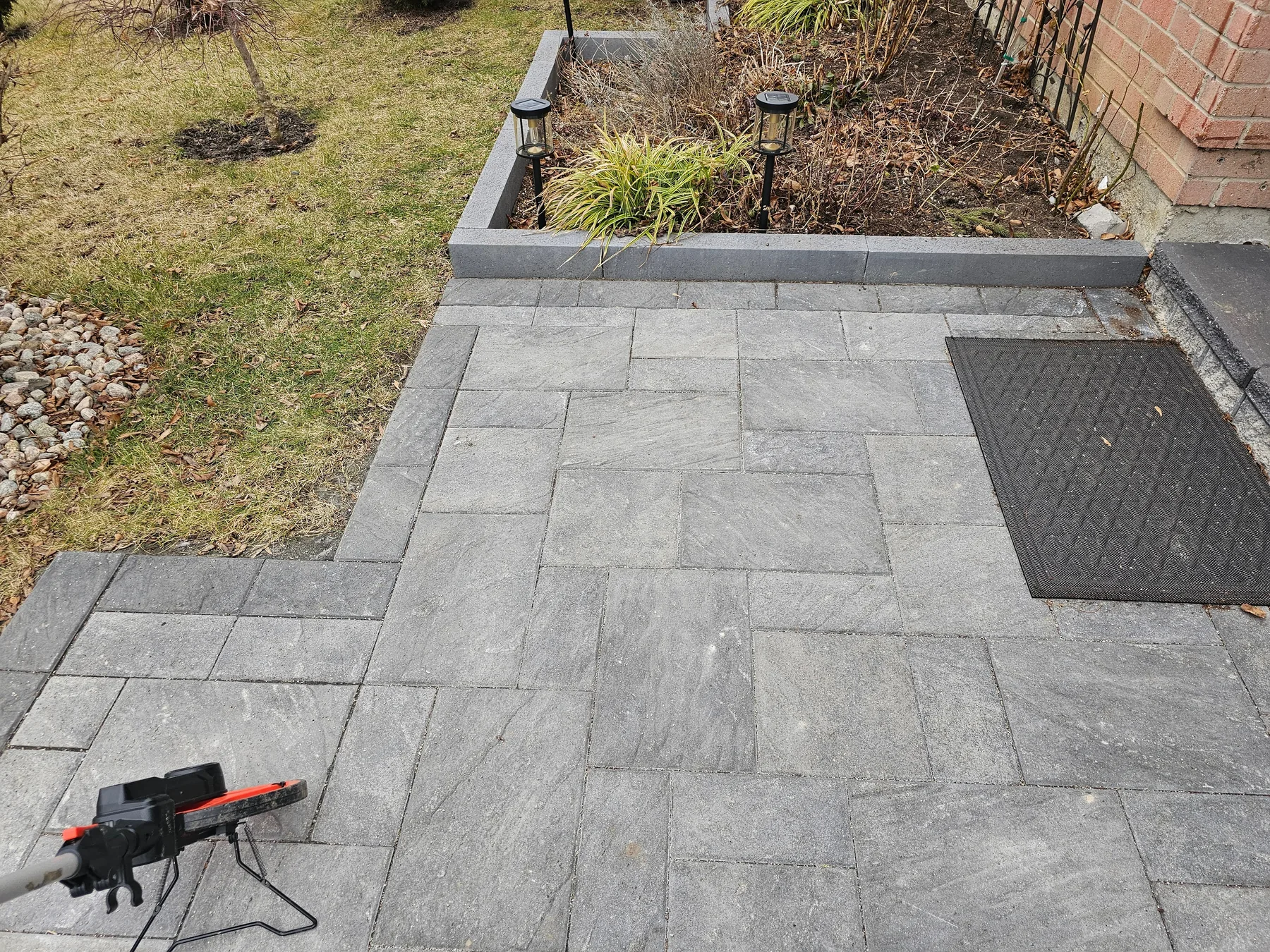
Why Interlocking Pavers Move After a GTA Winter
If you've walked out to your driveway this spring and noticed pavers tilted upward, a dip near the garage apron, or gaps opening between joints, you're looking at a base or drainage failure — not a defective paver. Interlocking concrete and clay pavers themselves rarely crack or fail structurally. What fails underneath them, especially in the Greater Toronto Area's freeze-thaw climate, is the compacted aggregate base and the drainage that's supposed to move water away from it.
Ontario's winters put driveways through dozens of freeze-thaw cycles each season. Water gets into the base layer through joints, settles, freezes, expands, and pushes pavers upward (heaving). When it thaws, the base can't always settle back evenly, and softer or poorly compacted spots sink. Repeat that cycle for a few winters and you get the wavy, uneven surface many GTA homeowners are Googling about right now.
The Three Most Common Failure Patterns
- Heaving near edges or the garage apron — usually caused by inadequate base depth or a missing/failed edge restraint that lets aggregate migrate outward under frost pressure.
- Sinking or a "birdbath" low spot — typically a sign the base wasn't compacted in proper lifts, or water is pooling and washing out fines from underneath.
- Gaps widening between pavers — often from insufficient polymeric jointing sand, edge restraint failure, or vehicle turning movement on a driveway that wasn't built for the vehicle load it now carries (larger SUVs, trailers).
Root Causes Specific to the GTA
1. Base Depth and Compaction
A driveway base built for foot traffic (4–6 inches of compacted granular A) will not hold up under vehicle loads long-term. Most reputable GTA installers now spec 6–8 inches of compacted 19mm clear stone for driveways, sometimes more on clay-heavy lots in Brampton and Caledon where native soil drains poorly.
2. Drainage and Grading
Municipalities across the GTA require positive drainage away from the house and, in most cases, away from the property line or toward an approved drainage point. If a driveway was built flat or sloped toward the foundation, water sits in the base year-round, accelerating frost heave. Toronto, Mississauga, and Vaughan all have grading requirements tied to site plan control or building permits for larger regrades — worth confirming with your municipality before a full rebuild that changes elevations.
3. Soil Type
Much of Peel Region and parts of Vaughan sit on clay or clay-loam soils that hold water and expand/contract more than sandy soils. This makes proper base gradation and drainage even more critical than the paver selection itself — a topic we cover in more depth in Interlocking vs Concrete Driveway in the GTA: Cost, Lifespan, and ROI.
4. Salt and De-Icer Damage
Heavy calcium chloride or rock salt use can accelerate erosion of jointing sand and, over years, contribute to base washout at joints. It's not the primary cause of heaving, but it compounds surface wear.
Repair vs. Full Rebuild: How to Decide
Not every uneven driveway needs to be torn out. A licensed contractor should assess:
- How much of the surface area is affected (isolated spot vs. widespread waviness)
- Whether the base itself failed or just the surface bedding sand
- Whether drainage was ever correct to begin with
- Age and condition of the pavers (are they still structurally sound to reuse?)
| Issue | Typical Fix | 2026 Estimated Cost (CAD) |
|---|---|---|
| Localized sinking (under 50 sq ft) | Lift pavers, add/compact base, relay | $600 – $1,500 |
| Edge heaving along driveway border | Reset edge restraint, re-compact base at edge | $500 – $1,200 |
| Widespread waviness across driveway | Full lift, base rebuild, relay existing pavers | $8 – $14 / sq ft |
| Full rebuild with new base, drainage correction, new pavers | Excavate, regrade, new base, new pavers | $18 – $28 / sq ft |
| Joint sand refresh only (cosmetic, no heaving) | Re-sand with polymeric sand | $2 – $4 / sq ft |
Costs are 2026 estimates for the GTA and vary with access, disposal fees, paver reuse vs. replacement, and site-specific drainage work. Get a written, itemized quote before committing — see our interlocking cost per square foot guide for a fuller breakdown of new-install pricing for comparison.
What a Proper Repair Should Include
A repair that doesn't address the underlying base or drainage issue will fail again within a season or two. Before hiring anyone, confirm the scope includes:
- Removal of affected pavers and inspection of the base underneath
- Identification of the actual cause (drainage, compaction, soil, edge restraint) — not just relaying pavers on the same failed base
- Re-compaction of granular base in proper lifts, not just topping up loose stone
- Correct slope re-established (generally a minimum grade away from structures, confirmed against your municipality's standards)
- New or repaired edge restraints (spikes, concrete curbing, or aluminum edging depending on original design)
- Fresh bedding sand and polymeric jointing sand, swept and compacted properly
- A written warranty on the repair, separate from the paver manufacturer's warranty
Preventing Future Heaving and Sinking
- Keep grading directing water away from the driveway edges, not toward them
- Reapply polymeric jointing sand every few years as it wears down
- Avoid piling snow in one concentrated spot repeatedly — uneven snow load and meltwater can saturate localized sections
- Address any low spots or standing water within the first year, before repeated freeze-thaw cycles make the problem worse
- Have edge restraints inspected annually, especially after a heavy frost season
When to Call a Contractor vs. DIY
Spot repairs on a small area (a few pavers, no drainage issue) are within reach for a handy homeowner with a plate compactor. But once heaving spans multiple sections, involves the driveway apron near the garage, or coincides with visible water pooling, it's worth having a licensed contractor diagnose the base and drainage before more pavers go back down on a problem that hasn't actually been fixed.
If your interlocking driveway is heaving, sinking, or gapping and you want an honest assessment of whether it needs a spot repair or a full rebuild, request a quote from Reformity Inc..
Related Services